

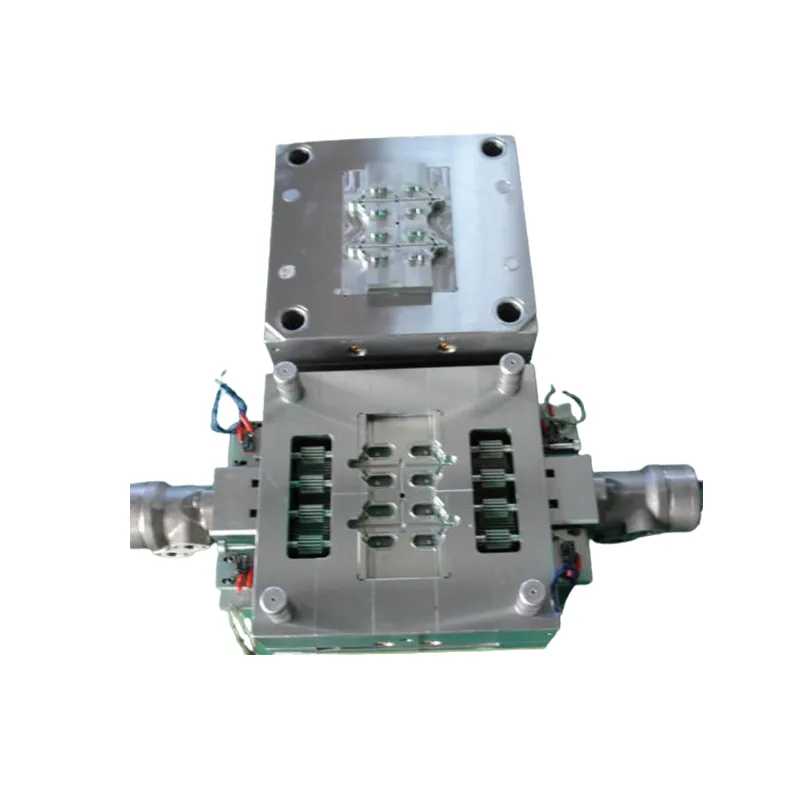
In the rapidly evolving electronics manufacturing sector, the quality of plastic molds directly determines component reliability and production efficiency. DERCO MOULD ENGINEER CO., LTD has released its latest technical capabilities for producing electronic component injection mold systems, backed by measurable performance data and rigorous process control. The company’s molds serve computer parts, phone components, and other electronic devices, with unit weights ranging from 100kg to 25 tons and compatibility with injection machines from 100 tons to 2,000 tons clamp force.
Technical Parameters and Material Selection for Electronic Component Injection Mold
A high-grade electronic component injection mold starts with material science. DERCO uses high-grade aluminum or hardened steel depending on production volume and precision requirements. For annual runs exceeding 500,000 cycles, steel molds (e.g., P20, H13) provide wear resistance. For prototyping or medium volumes, aluminum reduces lead time by 40%. Every electronic component injection mold undergoes CNC machining with positioning accuracy of ±0.01mm, followed by surface finishing via polishing (Ra ≤0.2μm) or sandblasting.
Family Injection Mold: Consolidating Multiple Parts into One Tool
For clients producing related components (e.g., multiple phone chassis parts or computer fan assemblies), DERCO engineers family injection mold designs that combine several cavities in a single base. A typical family injection mold reduces tooling investment by 30–50% compared to separate molds, while balancing fill rates through flow simulation. DERCO has delivered family injection mold projects with up to eight different part geometries in one tool, achieving cycle times under 45 seconds for small electronic housings.
Household Plastic Injection Mold for High-Volume Consumer Electronics
Beyond industrial electronics, DERCO applies its precision to household plastic injection mold systems for appliance casings, remote controls, and smart home devices. A household plastic injection mold must withstand 1M+ cycles without surface degradation. DERCO validates each household plastic injection mold using 100% first-article inspection and in-mold pressure sensors. Data from recent production shows defect rates below 0.3% for a household plastic injection mold producing 2.5 million switch covers annually.
Custom Precision Tooling Enables Complex Geometries and Tight Tolerances
Standard mold bases cannot meet all electronic requirements. DERCO specializes in custom precision tooling for parts with wall thickness variations (0.5mm to 5mm), deep ribs, or insert molding. Each custom precision tooling project begins with 3D/2D mold design using CAD/CAM software, followed by EDM for sharp internal corners. A recent custom precision tooling case for a medical device connector achieved ±0.008mm dimensional stability across 200,000 shots. For clients uncertain about specifications, DERCO provides DFM (Design for Manufacturing) reports as part of custom precision tooling feasibility analysis.
Multi Cavity Plastic Mold Maximizes Output Per Cycle
To lower per-part cost, DERCO configures multi cavity plastic mold systems with 2, 4, 8, or 16 cavities per tool. A multi cavity plastic mold for phone SIM trays produces 32,000 units/hour using a 550-ton injection machine. However, cavity balance is critical: DERCO uses hot runner systems and flow analysis to ensure each cavity in a multi cavity plastic mold fills within 0.5% variation. For a computer keyboard keycap project, a 16‑cavity multi cavity plastic mold reduced unit cost by 62% compared to a single-cavity design. Customers should specify annual volume: below 100k parts, a multi cavity plastic mold may not be cost-effective; above 500k parts, it is essential.
End-to-End Project Management from Concept to Production
DERCO manages the entire process – from initial concept to perfect completion – through dedicated project managers experienced in mold design, tooling manufacture, and injection molding process control. Each project receives a detailed production plan, weekly status reports, and digital images. This structure has reduced average lead time for electronic component injection mold projects to 28–35 days (for aluminum tools) and 40–50 days (for steel). For family injection mold and multi cavity plastic mold systems, simultaneous engineering cuts development iterations by 20%.
Maintenance and Validation: Ensuring Long-Term Mold Performance
Every mold requires regular maintenance to retain precision. DERCO recommends validation testing on a 200‑ton or 500‑ton injection machine before shipment. Post-delivery, a household plastic injection mold should undergo cleaning every 50,000 cycles and full inspection every 200,000 cycles. For custom precision tooling with sliding cores, lubrication intervals of 10,000 cycles prevent galling. DERCO provides a maintenance checklist and spare parts list for each tool.
Selection Guide: Which Mold Type Fits Your Production?
| Your Requirement | Recommended Mold Type | Why |
|---|---|---|
| Multiple related parts (e.g., assembly) | Family injection mold | Single tool, lower investment |
| High-volume consumer electronics | Household plastic injection mold | Optimized for 1M+ cycles |
| Complex geometry or tight tolerance | Custom precision tooling | Tailored steel/alu, EDM finishing |
| Maximum output per cycle | Multi cavity plastic mold | 2–16 cavities, lowest per-part cost |
| General electronic components | Electronic component injection mold | Standard precision, 100kg–25t weight range |
DERCO’s clamp force capacity (100–2,000 tons) supports all above mold types, with mold weight from 100kg to 25 tons.
Contact for Inquiries
For technical datasheets, cycle simulation reports, or to discuss your electronic component injection mold, family injection mold, household plastic injection mold, custom precision tooling, or multi cavity plastic mold project, contact DERCO directly.
DERCO MOULD ENGINEER CO., LTD
WhatsApp: +86 136 2095 8219
Email: Sales@derco-mould.com
All specifications are based on actual production data. Lead times and defect rates vary by part geometry. Contact for a DFM analysis of your 3D file.
